









E0, E1, CARB Phase 2: A Trusted Laminate Company’s Guide to Formaldehyde Standards
 Jul 24, 2026|
 View:571
When you pick laminate flooring, knowing about E0, E1, and carb phase 2 standards keeps you safe and comfortable. Formaldehyde is often found in flooring. It can change the air inside your home. It may cause irritation or make asthma worse, especially when it gets hot. New studies show even small amounts can cause allergies and trouble breathing. Flooring that follows strict carb standards helps you feel safe. Richwood is a trusted brand. It gives a clear guide to safe flooring for every step of your project.
Key Takeaways
Pick laminate flooring with E0, E1, or CARB Phase 2 labels. These labels mean the floor gives off less formaldehyde. This helps keep your indoor air clean.
E0 has the least emissions. E1 is next. Both are safer for your house.
Check for third-party certifications on your flooring. These show the floor meets tough safety rules.
Choose flooring with low emissions. This can lower health risks like allergies and trouble breathing for your family.
Richwood has many safe and stylish floors. Their floors follow formaldehyde standards. You get good quality and safety.
E0, E1, and CARB Phase 2 Overview
What Are E0 and E1?
When you shop for safe laminate flooring, you will notice E0 and E1 labels. These labels tell you how much formaldehyde comes from the flooring. E0 and E1 are two grades in formaldehyde emission standards. E0 has the lowest emission. E1 is also low but a bit higher than E0. You can see the limits in the table below:
Grade | Emission Limit (mg/L) |
|---|---|
E0 | ≤ 0.5 |
E1 | ≤ 1.5 |
E0 and E1 standards help you pick flooring that keeps your air clean. Some people think all laminate flooring is unsafe. New products follow strict carb formaldehyde standards. These choices help you feel safe.
What Is CARB Phase 2?
CARB means California Air Resources Board. This group makes rules to keep you healthy. CARB phase 2 is a set of strict standards for formaldehyde in wood products. This includes laminate flooring. These rules are for products sold in California and other places. Phase 2 standards set clear limits for different wood products. Here is a table with the main limits:
Product Type | Maximum Emission Limit |
|---|---|
Hardwood Plywood – Veneer Core | 0.05 ppm of formaldehyde |
Hardwood Plywood – Composite Core | 0.05 ppm of formaldehyde |
Medium-Density Fiberboard (MDF) | 0.11 ppm of formaldehyde |
Thin Medium-Density Fiberboard (Thin MDF) | 0.13 ppm of formaldehyde |
Particleboard | 0.09 ppm of formaldehyde |
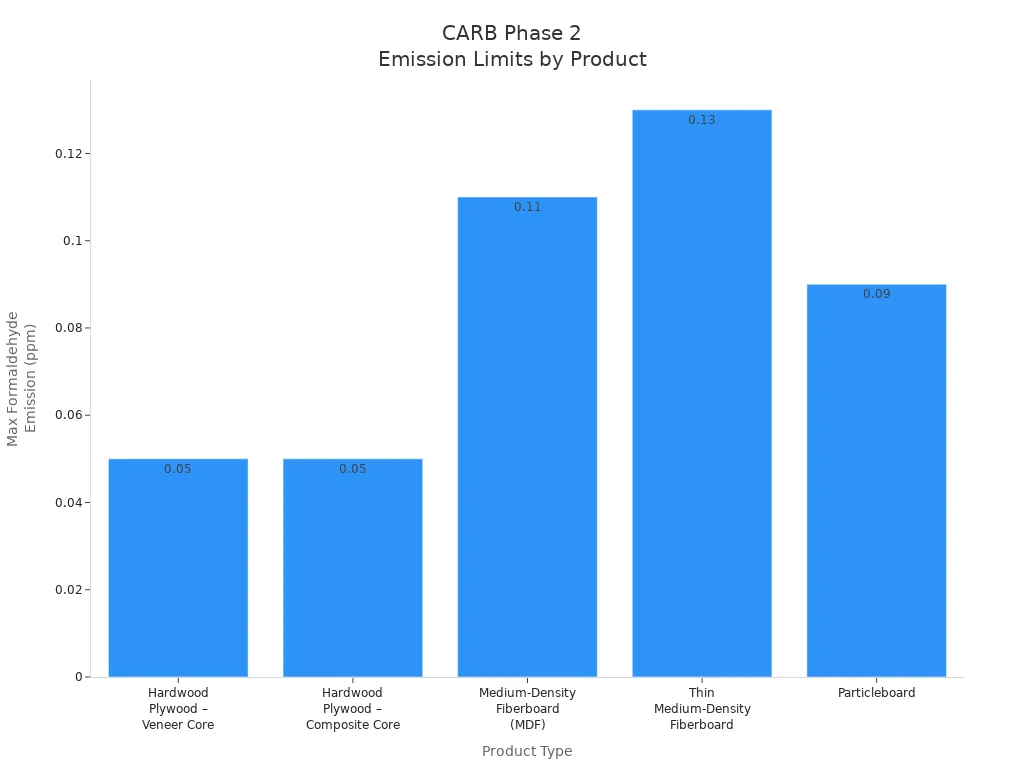
CARB phase 2 standards make manufacturers use low-emitting resins. Products must pass tests by approved third-party certifiers. You will see labels like “CARB Phase 2 Compliant” on safe products.
Why Standards Matter
You want your home or business to be safe. Formaldehyde can cause eye, nose, and throat irritation. It can also lead to asthma or bronchitis. Research shows that less formaldehyde in flooring improves air and health. The california air resources board made carb phase 2 to protect you and your family. The industry now follows stricter carb formaldehyde standards. More companies make low-emission flooring to meet these rules. You have more choices for safe, stylish floors. This guide helps you see why these standards matter for your health.
Tip: Not all laminate flooring is bad. Look for E0, E1, or carb phase 2 labels to make a smart choice.
Formaldehyde in Laminate Flooring
What Is Formaldehyde?
You might hear about formaldehyde when people talk about air inside. Formaldehyde is a gas you cannot see, but it smells strong. It is part of a group called volatile organic compounds. Many building materials and home products have formaldehyde. It helps make glues that stick things together. When these things let out formaldehyde, it is called off-gassing. Off-gassing happens slowly, especially when it is hot or wet.
Where It’s Found in Flooring
Laminate flooring uses resins with formaldehyde. The core layer is often high-density fiberboard. This layer is a main source of formaldehyde. Makers use urea-formaldehyde or melamine-formaldehyde resins to hold wood fibers. Sometimes, not all the formaldehyde reacts, so some stays in the floor. Over time, off-gassing lets formaldehyde into your home. Old laminate floors, made before strict rules, can give off more formaldehyde. Besides laminate flooring, you can also find formaldehyde in:
Wallpapers
Wood-based panels
Carpets
Other VOCs and semi-volatile organic compounds
Health Risks of Formaldehyde
It is important to know how formaldehyde can affect your health. Breathing in formaldehyde can cause problems right away and later on. The table below shows some symptoms and risks:
Health Risk Type | Symptoms/Conditions |
|---|---|
Short-term symptoms | - Eyes, nose, and throat can get irritated |
- You may get headaches or feel dizzy | |
- You might cough or have trouble breathing | |
- Your skin can itch or get rashes | |
Long-term exposure | - Breathing problems can get worse, like asthma |
- Allergies can happen again and again | |
- There is a higher risk of some cancers because formaldehyde is a carcinogen |
You might feel itchy or get allergies soon after being around formaldehyde. If you breathe it for a long time, you can get more serious health problems. Knowing about these risks helps you pick safer things for your home.
Comparing E0, E1, and CARB P2
Emission Limits and Testing
When you shop for laminate flooring, you want to know about formaldehyde. Each standard has its own limit for how much can be released. You can see the main limits and how they test in the table below:
Standard | Emission Limit | Testing Method |
|---|---|---|
E0 | ≤ 0.5 mg/L | Chamber tests |
E1 | ≤ 1.0–1.5 mg/L | Chamber tests |
E2 | ≤ 5.0 mg/L | Chamber tests |
CARB Phase 2 | 0.05 ppm | Third-party testing |
Special chambers are used to test for these standards. The chambers control things like temperature and air. Experts use methods such as ASTM E1333 and EN 717-1. These tests check how much formaldehyde comes out over time. For CARB Phase 2, outside labs test the products. They use methods like ASTM D6007 and the CARB Standard Operating Procedure. Sometimes, they take apart the flooring to see how glue and finishes affect emissions.
Tip: Always make sure your flooring passed third-party testing. This helps you pick safe flooring.
Regulatory Differences
Different countries use different rules for formaldehyde in flooring. The table below shows how E0, E1, and CARB P2 compare in different places:
Standard | Formaldehyde Emission Level | Description | Applicable Countries |
|---|---|---|---|
CARB P1 | ≤ 0.18 ppm | First phase to lower emissions | United States, Canada, other CARB regions |
CARB P2 | ≤ 0.09 ppm | Stricter phase for lower emissions | United States, Canada, other CARB regions |
E1 Standard | ≤ 0.1 ppm | European standard for wood products | European Union, other EU markets |
E0 Standard | ≤ 0.04 ppm | Higher standard for eco-friendly products | European Union, international markets |
Class A | < 0.07 mg/m³ | Chinese standard for ultra-low emissions | China, countries using Chinese regulations |
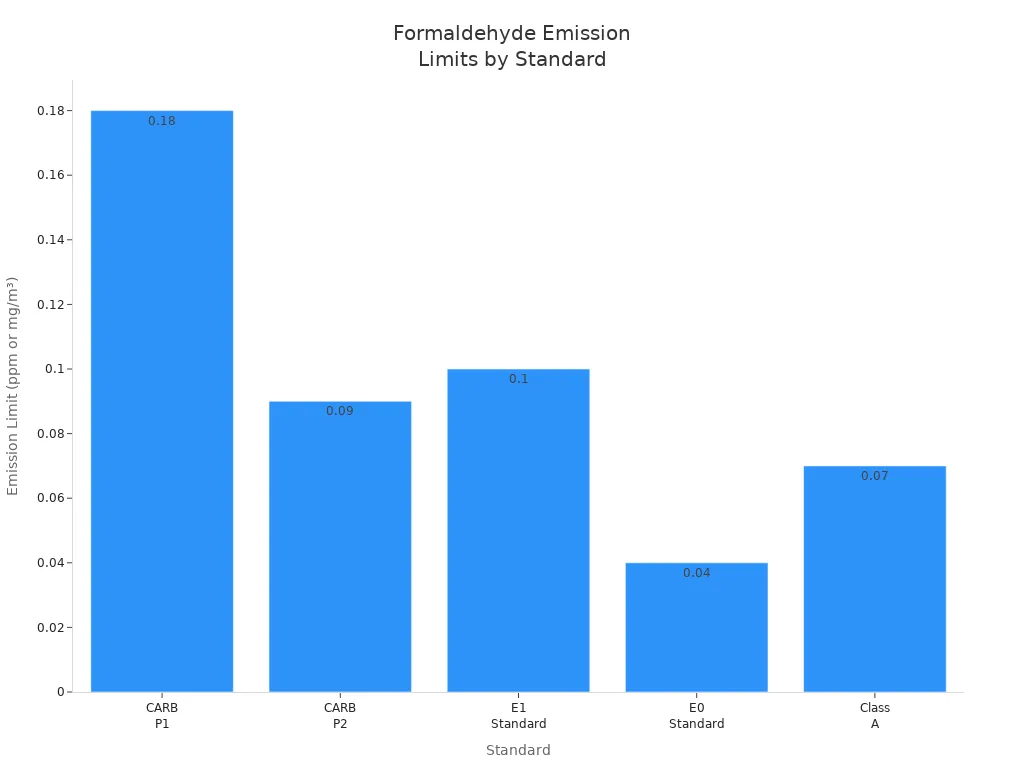
CARB Phase 2 is important in North America. E1 and E0 are used in Europe and other places. China uses the Class A standard. Each rule has a different limit, so check which one is best for you.
Which Standard Is Stricter?
You want the safest laminate flooring for your home or business. The strictest standard means the lowest formaldehyde. E0 and CARB P2 both have very low limits, but they are not the same. The chart below shows how each standard compares:
Standard | Limit (mg/m³) | Description |
|---|---|---|
E0 | ≤0.050 | Stricter than E1, for health-conscious buyers |
E1 | ≤0.124 | Basic safety line in many countries |
CARB P2 | 0.05 ppm | Varies by panel type, key in North America |
ENF | ≤0.025 | The strictest limit worldwide |
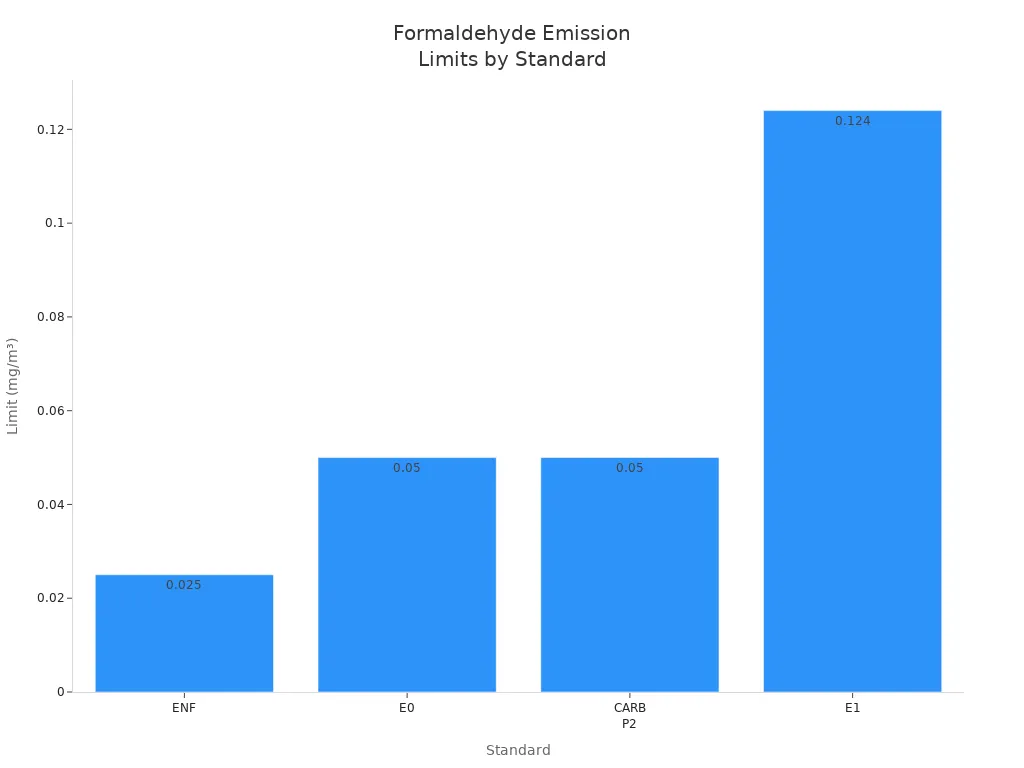
ENF is the strictest, but E0 and CARB P2 are also very strong. CARB P2 covers many types of wood panels and uses outside labs for testing. E0 is popular in Europe and is for eco-friendly products. E1 is a good safety line, but it is not as strict as the others.
Note: If you want the lowest emissions, look for flooring with E0 or CARB Phase 2 certification. These standards help you keep your indoor air clean.
CARB Compliance and Certification
How to Check for CARB Labels
You want your laminate flooring to be safe. Checking labels helps you know it follows the rules. Look for a CARB compliant label on the box. This label means the product meets strict standards for formaldehyde. You can also find TSCA Title VI labels. These labels show the flooring follows US laws. Use the checklist below to help you check if the flooring is safe:
Description | |
|---|---|
Third-Party Testing | An outside lab checks the product for CARB phase 2 and TSCA Title VI rules. |
Documentation Review | Ask the maker for test reports and certificates. |
Official Databases | Look at CARB and EPA databases to see if the product or company meets the rules. |
Tip: Always check for clear labels and ask for papers before you buy.
Third-Party Certification
Third-party certifiers are important for making sure products follow the rules. These groups test products in approved labs. NALFA, the North American Laminate Flooring Association, makes all members use third-party CARB-approved labs. Every NALFA member follows CARB rules. This process helps you trust the flooring’s materials and emissions. You should also look for certifications like FloorScore. FloorScore checks for low VOC emissions and is used in green building programs.
Certification | Description |
|---|---|
NALFA LF-01 & CARB2 Compliant | Products checked by outside labs, meeting US emission rules. |
FloorScore® | Certification for low VOC emissions, used in green building programs. |
Note: Certification from trusted labs keeps you safe and makes sure products follow the rules.
Questions for Suppliers
You need to ask good questions to make sure the flooring is safe. Here are three important questions:
Is the product labeled as TSCA Title VI compliant?
Which Third-Party Certifier (TPC) did the testing?
Can you show the compliance papers?
Asking these questions helps you know your laminate flooring follows formaldehyde standards. Suppliers should give clear answers and show proof. This keeps you and your family safe from harmful emissions.
Richwood’s Commitment to Safety
Richwood’s Product Standards
You want safe flooring in your home. Richwood uses special ways to make sure their products are safe. They check formaldehyde at every step. The table below shows what Richwood does:
Step | Description |
|---|---|
1 | Low-pressure short-cycle hot-pressing at 195°C with 3.6MPa pressure |
2 | 1–3 days primary curing |
3 | Precision cutting |
4 | 7+ days secondary stress-relief aging |
5 | High-speed tenoning |
6 | Edge transfer printing |
7 | Full-perimeter wax sealing |
These steps help keep formaldehyde low. Richwood’s floors meet carb phase 2 and other rules. They check each step to keep you healthy.
Flooring Options and Features
Richwood has many types of flooring. You can choose different thicknesses and colors. Each floor has an AC rating, so you know how tough it is. Richwood also has aqua flooring. This kind is good for wet places like kitchens. SPC flooring looks like wood but is strong like vinyl. You get style and safety for your project.
Tip: Richwood’s floors come in many styles. You can pick Australian, South American, or Myanmar looks. You can match your room and stay safe.
Support and Warranty
You want help when picking new floors. Richwood helps you from start to finish. They give tips for installing and answer questions about carb and formaldehyde. Richwood offers a warranty for peace of mind. You can trust them to help you at every step. They care about safety and quality.
Note: Richwood’s team explains safety rules. They make sure your floor follows all the standards.
Impact on Indoor Air Quality
Benefits of Low-Emission Flooring
You want your home or business to feel fresh and safe. Choosing low-emission flooring helps you reach that goal. Floors that meet strict standards release less formaldehyde into the air. This means you breathe cleaner air every day. When you pick E0, E1, or carb phase 2 compliant flooring, you lower the risk of off-gassing. Off-gassing happens when chemicals leave the floor and mix with the air inside.
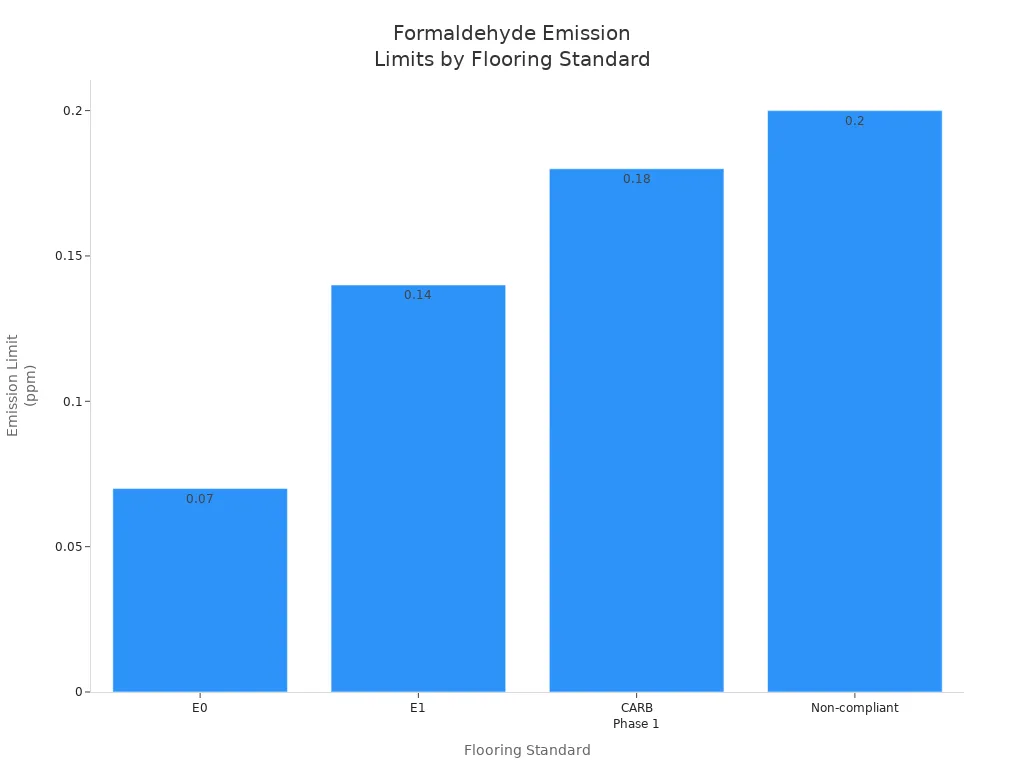
The table below shows how much formaldehyde different flooring types can release:
Standard | Formaldehyde Emission Limit |
|---|---|
E0 | 0.07 parts per million |
E1 | 0.14 parts per million |
CARB Phase 1 | 0.18 parts per million |
CARB Phase 2 | Lower than Phase 1 |
Non-compliant | Up to 0.20 parts per million (pre-2009) |
You can see that non-compliant floors let out the most formaldehyde. E0 and E1 floors keep emissions much lower. This makes a big difference in indoor air quality, especially in health-sensitive environments like schools or hospitals.
Tip: Clean air helps you focus, sleep better, and feel more comfortable at home.
Long-Term Health and Comfort
You spend a lot of time indoors. The air you breathe matters for your health. Low-emission flooring reduces the chance of headaches, allergies, or breathing problems. Over time, less formaldehyde in your space means fewer health risks. You protect children, older adults, and anyone with asthma or allergies.
Floors that meet strict standards also keep their quality longer. You do not have to worry about strong smells or harmful off-gassing. Your home stays comfortable and safe for years. When you choose the right flooring, you invest in your well-being and peace of mind.
You are making a good choice when you pick flooring with E0, E1, or CARB Phase 2 standards. These rules help protect your health and keep the air inside clean. The table below shows what is most important when choosing safe flooring:
Key Takeaway | Explanation |
|---|---|
Compliance is baseline, not a bonus | Following E0, E1, and CARB Phase 2 standards is needed for picking products. |
Stability reduces installation risks | Picking compliant flooring helps it stay stable and lowers problems during installation. |
Certified manufacturers simplify sourcing | Buying from certified makers makes choosing easier. |
You should always look for labels and certificates. Richwood offers safe and stylish floors and helps you with your needs. Make sure you care about indoor air quality for your home or business.
FAQ
What does "CARB Phase 2 compliant" mean for my flooring?
CARB Phase 2 compliant means your flooring meets strict rules for low formaldehyde emissions. You get safer air in your home. Always check for this label before you buy.
How can I tell if my laminate flooring is safe?
Look for E0, E1, or CARB Phase 2 labels on the box. Ask your supplier for test reports or certificates. Safe flooring will have clear proof of compliance.
Why should I care about formaldehyde in flooring?
Formaldehyde can cause headaches, allergies, or breathing problems. Low-emission flooring helps you avoid these health risks. You protect your family and improve indoor air quality.
Does Richwood offer flooring for wet areas?
Yes! Richwood’s aqua flooring resists moisture. You can use it in kitchens, bathrooms, or laundry rooms. It keeps your space safe and stylish.