








What thickness of laminate flooring is best?
 Aug 21, 2026|
 View:219
You want to choose the right thickness for laminate flooring in your house. Picking a 10mm to 12mm board gives you great results for normal living areas. A 10mm laminate offers a good mix of strength, sound control, and affordability.
Thinner laminate flooring from 6mm to 8mm works well for lower budgets or very smooth subfloors. Still, thicker options like 10mm and 12mm boards handle heavy drops much better. They quiet room noise more effectively and feel much sturdier when you walk on them. Richwood provides high-quality laminate options in all these sizes to match your specific style. You get long-lasting comfort and support by picking the best floor thickness now.
Key Takeaways
Pick 10mm to 12mm laminate for high-traffic rooms to get the best durability and noise reduction.
Use low-cost 6mm to 8mm planks in quiet spaces like guest bedrooms.
Make sure your subfloor is totally flat before putting down thin laminate so the locking pieces do not break.
Check the Abrasion Class rating to make sure the surface resists scratches well.
Combine thick boards with good underlayment to lower noise and make walking more comfortable.
Comparing Laminate Flooring Thickness Options
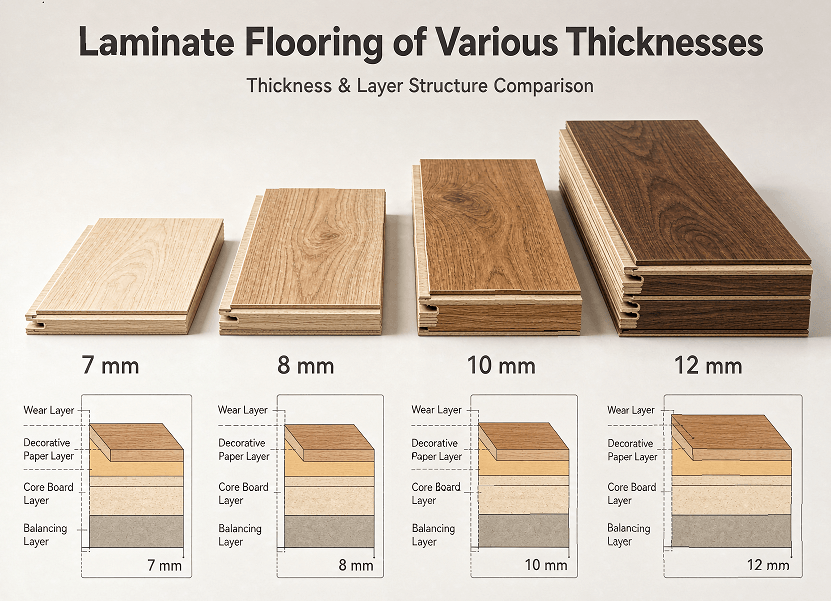
Standard laminate flooring thickness spans from 6mm to 12mm for most homes. Top-rated lines like Richwood Laminate Flooring offer planks from 7mm up to 12mm. The thickness you pick affects the style, sound, and feel of your room. Learn these basic traits before buying supplies for your next home improvement project.
Thin Options: 6mm to 8mm
Planks that measure 6mm to 8mm fall into the thin laminate category. House owners choose them for fast updates or rental spaces. These boards cost less because makers use fewer raw materials. Still, you must smooth out your subfloor before installing thin laminate flooring. Thin planks show every bump beneath them. Even tiny flaws can ruin the finish and break the floor locks later.
The level tolerance for laminate flooring is ± 3 mm (1/8") in 3000 mm (120") or FL30 and FF20.
If your subfloor is rougher than this limit, level it right away. Skipping this step causes loose edges and squeaky boards when you walk. Budget projects do well with simple boards in spare bedrooms or quiet home offices. Low prices help you refresh extra rooms without spending too much money.
Thickness | Cost per sq ft |
|---|---|
6 mm | $0.70 – $1.00 |
10 mm | $2.00 – $4.00 |
Check the simple chart above to compare average prices per square foot. Thin boards save cash early on, but medium thickness laminate or thicker choices add lasting value to busy rooms.
Thick Options: 10mm to 12mm
Thick laminate flooring gives your living space extra comfort and steady support. Planks measuring 10mm to 12mm feel like real wood much more than thin options. The strong fiberboard inside Richwood planks adds great durability to every board. Thick laminate stays solid underfoot, easily handling hard hits from daily family life. You hear fewer hollow noises when walking across these heavy-duty floors.
Thicker boards allow manufacturers to cut deeper click-lock grooves along the edges. Strong locking systems hold the boards close together during installation. Secure seams stop ugly gaps, keeping dirt and spills away from your subfloor. Stiff boards snap together easily, so installation goes much faster.
Thick laminate flooring covers small subfloor bumps far better than lighter options. The tough middle layer hides tiny dips without warping. Also, thicker laminate naturally quietens noisy footsteps. Combine 10mm or 12mm planks with good padding to reduce sound in two-story homes. Richwood designs these strong boards to match real wood looks with lasting strength. You enjoy dependable floors, nice style, and quiet footsteps in active home spaces.
Key Benefits of Increased Laminate Flooring Thickness
Acoustic Insulation and Foot-Feel
Picking thicker laminate brings great benefits as you walk around your house. Heavy boards act like a sturdy wall that blocks annoying room sounds. The high-density fiberboard (HDF) inside Richwood floorsaks captures noisy sound waves very well. You get a quiet home because the thick core stops deep footstep vibrations. Strong HDF centers also give each board extra power to last for many years. You get to step on solid, reliable ground every single day. Buying thick laminate flooring calms down loud household noise with very little effort. Your whole family gets to enjoy quiet, peaceful rooms.
Thick laminate floors feel super sturdy underfoot, just like real wood planks do. Thinner flooring choices tend to bend under your weight and make loud hollow echoes. Going with a thicker laminate supports your feet firmly during busy morning schedules. You will notice better balance in active spots like living rooms, entryways, and hallways. These heavy boards soak up sudden hits from drops without any trouble. Making this smart floor choice keeps your main living spaces quiet, warm, and cozy.
Subfloor Tolerance and Joint Strength
Thicker boards let factory machines carve deeper connecting grooves along the plank edges. These larger click-lock edges make your installation work much easier to finish. You can easily snap the pieces together without breaking fragile edges. Strong locking joints keep every plank locked tight under heavy couches and large bookcases. Tough locks also prevent open gaps when temperatures change throughout the year. You can finish your flooring job quickly and without any hassle.
Small bumps on your subfloor usually create big problems during home updates. You save on expensive repairs because thick laminate covers tiny dips and uneven spots easily. Tough click-lock seams stop ugly gaps from opening up after years of daily walking. These helpful structural traits protect your new floors from normal family wear and tear. You get lovely laminate floors that stay flat, solid, and tough in every room. Your home keeps a clean, fresh look for a long time.
Finding the Right Laminate Thickness for Each Room
Every room in your house needs a specific type of floor plank. Busy areas need tough boards to stay strong over time. Quiet rooms can use simple, basic floors instead. Picking the right choice for every space keeps your floors looking great everywhere.
Busy Living Spaces and Kitchens
Living rooms, hallways, and kitchens see lots of action every day. Kids run around these active areas all the time. Pets slide on the floor with sharp nails. Heavy furniture rests on the boards for years. You should pick thick laminate here to prevent early surface damage. Planks from 10mm to 12mm soak up hard hits with ease.
Pick thicker laminate (10mm-12mm) in kitchens or living rooms to handle daily use without showing wear.
Kitchens face daily risks from occasional water spills and constant walking. Floor makers suggest these key protective features to keep kitchen floors stable over many years:
Water-resistant top layer
Sealed or waxed edges
Strong click-lock joints
AC4 rating or higher
10–12 mm thickness
Clear water-resistance warranty
You get maximum durability by choosing 10mm or 12mm boards for busy family rooms. Thick planks feel sturdy and firm when you walk on them. They resist heavy traffic without bending down or springing back up. Very busy places like hospitals use thick 12mm boards for top floor power. You guard your home investment by putting thick boards where people gather most.
Quiet Bedrooms and Temporary Spaces
Guest rooms, small closets, and short-term rentals see very little foot traffic. People rarely drag big furniture across these quiet floors. Family members walk over these cozy surfaces in soft socks or bare feet. You do not need the thickest planks for these calm rooms.
A thin laminate option like 6mm or 7mm works great for quiet bedrooms. These low-cost choices help save your money on big home projects. They let you refresh extra rooms fast without spending too much cash. Still, you need a smooth subfloor before putting these down. Thin boards show bumps underneath them very fast.
You can also pick medium thickness laminate near 8mm for spare rooms. An 8mm board offers nice step comfort while holding down overall costs. This smart middle option gives you good noise control without adding extra expenses.
You match cost and comfort by picking the right board thickness for every room. Active living spaces need heavy 10mm or 12mm planks to stay strong. Quiet bedrooms work fine with lighter board options. You build a smart home layout by matching plank size to room activity. This smart plan saves cash on quiet rooms. It uses your home budget right where high quality counts most.
Evaluating Overall Quality Beyond Thickness
Plank Thickness vs. AC Durability Ratings
Many homeowners mistake overall board thickness for true surface strength. Plank thickness actually controls structural firmness and balance beneath your feet. Meanwhile, Abrasion Class (AC) ratings measure how well the top layer resists scratches and scuffs. Good laminate flooring lines offer many choices with high wear resistance levels. You can get reliable performance across different board sizes without losing your favorite style.
A protective layer shields the laminate surface from daily stains, heat, and deep scratches. High-grade products offer six clear wear levels for different rooms. An AC1 rating works for quiet bedrooms, while AC6 handles busy places like airport terminals. Clean air in your home matters just as much as floor strength. Quality laminate meets strict air safety rules through official FloorScore testing. These certified production methods keep your indoor air free from harmful chemical gases.
Subfloor Preparation and Underlayment Selection
A flat subfloor creates a strong base for your home improvement project. Good underlayment cuts down footstep noise and blocks moisture under your boards. You make installation easier by smoothing the subfloor early in your project. Flat subfloors protect fragile click locks from snapping under heavy household furniture. Installing thin laminate flooring requires a flat subfloor to stop early board damage. However, thick laminate easily covers tiny subfloor dips.
Good underlayment also makes your floors feel much nicer to walk on. Soft underlayment padding supports thicker planks, keeping your rooms quiet, warm, and solid underfoot. A high-density fiberboard core gives your floor extra strength for long-term home use. Modern certified factories build these eco-friendly boards using advanced German tech and careful testing. Choosing the right padding guarantees comfortable results for your entire flooring job.
Picking a 10mm to 12mm board gives your busy rooms great strength, quiet footsteps, and better coverage for uneven subfloors. Alternatively, you can choose an 8mm board for quiet guest bedrooms to save extra money. This smart option works very well if you smooth the subfloor before putting down the boards.
Check this quick guide to choose the best laminate floor thickness for every room:
Room Type | Traffic Level | Subfloor Condition | Recommended Laminate |
|---|---|---|---|
Kitchen / Living Room | High | Small Dips | 10mm–12mm laminate |
Guest Bedroom | Low | Flat | 6mm–8mm thin laminate flooring |
You create quiet, strong spaces across your house by picking the right board size today.
FAQ
Does a thicker board make laminate last longer?
Board thickness does not control how easily the floor scratches. Good laminate relies on the Abrasion Class (AC) rating to show surface durability. Thicker options offer better base strength while quietening loud footsteps. Pick high AC scores to shield your floor finish from marks and spots.
Does laminate flooring require a perfectly flat subfloor?
Yes. Regular setup rules say subfloors must stay flat within 3 mm across 3000 mm. Using 10mm to 12mm boards helps hide tiny subfloor dips. But thin boards display every small bump underneath, which breaks your locking joints over time.
How does plank thickness affect the installation process?
Thicker boards have larger locking slots cut into their edges. These tough joints click together fast and stop wide gaps under heavy couches. They make your project move along faster since sturdy edges rarely snap during placement.
Can you put 8mm laminate in high-traffic living rooms?
Using 8mm laminate in main rooms works fine if your base floor stays completely flat. Still, busy areas endure hard drops much better with 10mm or 12mm boards. Thicker floors lower hollow echoes, giving active homes a firm step underfoot.