










Essential Guide for Wholesale Laminate Flooring Installation Services
 Dec 04, 2025|
 View:726
If you want your laminate flooring wholesale project to go smoothly, it's essential to understand the basics of installation. You might encounter issues such as allowing your flooring to acclimate to the room for a few days, ensuring there is adequate space for expansion, and navigating various locking systems. This guide will assist you in completing the installation correctly.
Laminate Flooring Wholesale Buying Guide
Key Benefits for Wholesale Buyers
If you buy laminate flooring wholesale, you want a good price and the right features. Buying in bulk means you pay less and get more choices. You can pick from many colors and styles to fit your design. Here are some reasons why wholesale buyers like laminate flooring:
You spend less because buying in bulk skips extra store costs.
You get your order faster, so your project does not get delayed.
You have more options, so finding good laminate flooring is easier.
See how bulk prices compare to retail prices:
Description | Price Comparison |
|---|---|
Retail Price | Higher per unit |
Bulk Price | Lower per unit |
You should also think about important features before buying laminate flooring. Look for steady supply, minimum order size, warranties, and green certifications. These things help you work well with suppliers and meet eco-friendly rules.
Factor | Description |
|---|---|
Consistent Volume | Steady orders mean better prices and faster service. |
Minimum Order Quantities | Know the smallest amount you can buy. |
Warranties and Support | Good warranties and help make your purchase better. |
Environmental Certifications | Certified floors are safer for the environment. |
Overall Lifecycle | Floors with clear info are good for green buyers. |
Types and Grades of Laminate Flooring
There are many types of laminate flooring you can buy. This guide helps you compare thickness, width, texture, and wood type. Most laminate flooring is between 6 mm and 12 mm thick. Thicker boards last longer and feel stronger. You can choose smooth, rough, or wood grain textures. Oak, maple, and hickory are popular wood types.
Specification Type | Options Available |
|---|---|
Thickness | 6 mm, 7 mm, 8 mm, 9 mm, 10 mm, 12 mm |
Width | 6.06 in., 6.18 in., 6.26 in., 7.48 in., 8 in., 11.551 in. |
Texture | Authentic Graining, Distressed, Natural Wood Grain, Smooth, Subtle |
Wood Grade | Oak, Maple, Hickory, Other |
The AC rating system tells you how tough each type is. Pick the right grade for your room. Here is a simple chart:
AC Rating | Description | Ideal Use |
|---|---|---|
AC1 | Basic strength for rooms with little walking | Closets, guest bedrooms |
AC2 | Good for rooms with some walking | Living rooms, dining rooms |
AC3 | Works for busy areas and some business places | Entryways, kitchens, family rooms |
AC4 | For busy homes and most business spaces | Rental homes, homes with pets |
AC5 | Best for very busy business places | Big families, homes with large dogs |
To make your floors last, pick strong laminate flooring with the right AC rating. This helps your floors stay nice even with lots of use.
Tip: Always look for certifications from groups like FloorScore or GREENGUARD. These show your laminate flooring is safe and healthy.
Preparing for Laminate Flooring Installation
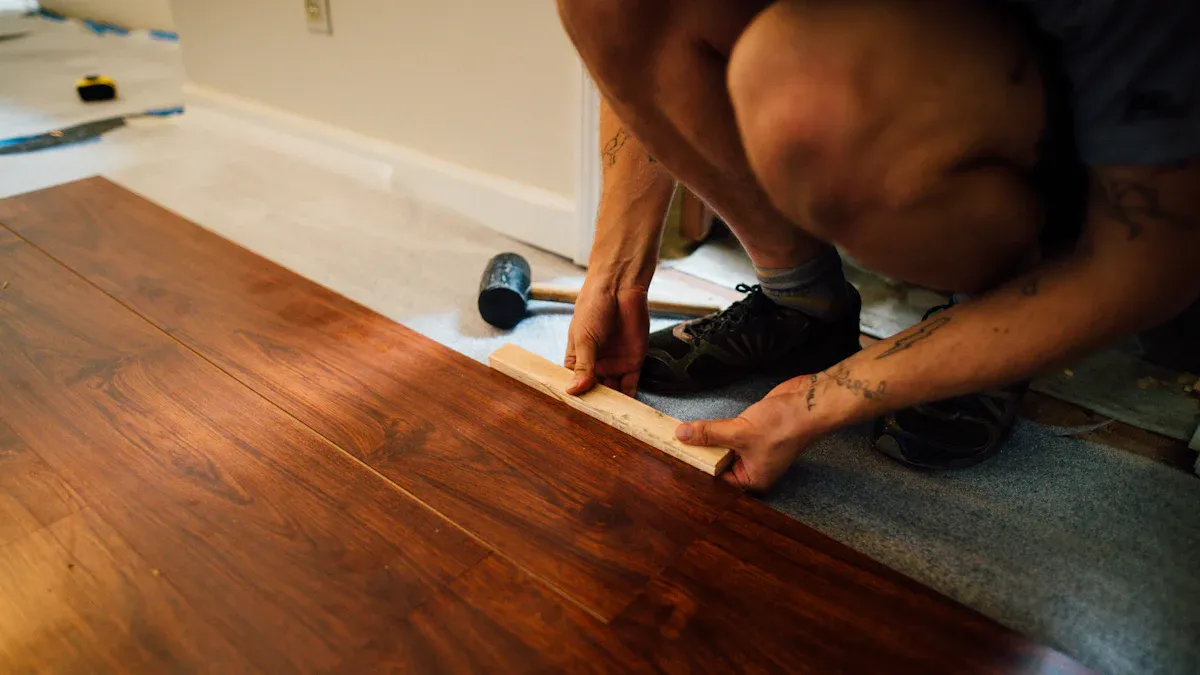
Getting ready to install laminate flooring is important. You want your space to look nice and last long. Let's go over the steps so you don’t make mistakes. This will help you get the most from your money.
Site Assessment and Room Preparation
Check your site before you start. Big laminate flooring projects need good planning. You should:
Look at the site to find problems early.
Check the property for subfloor or structure issues.
Use what you find to choose the best materials and ways to install.
Next, get each room ready. Here’s how to make things easy:
Clean the area and keep your furniture safe. Take out small things like lamps and books first. This keeps things safe and stops messes.
Move big furniture or put it away. Use sliders or dollies for heavy things. If something is too heavy, you can hire movers.
Get the subfloor ready. Clean it, check for water, and fix any bumps. This helps your laminate flooring last longer.
Plan when and how you will work. Talk with your workers to set a schedule and make sure you have all your materials.
Measuring your space is very important. Good measurements help you buy the right amount of flooring and stop waste. Do these steps:
Draw a simple floor plan. Show all walls, doors, closets, and things that don’t move.
Break big rooms into smaller parts. Measure each part by itself.
Measure each wall at the floor. Write down every number.
Measure closets and small spaces. Add these to your total size.
Mark doorways and places where floors change. Show where you need transition strips.
Find things in the way. Mark vents, outlets, or anything that needs special cuts.
Check your numbers again. Make sure everything is right.
Tip: Careful room prep and measuring can save you money and time. You won’t run out of materials or buy too much.
Subfloor and Underlayment Needs
Your subfloor is the base for your new laminate flooring. If you skip this, you could have problems later. Here are some common subfloor problems and how to fix them:
Subfloor Issue | Causes | Suggested Fixes |
|---|---|---|
Gaps | Uneven subfloor, poor acclimation, loose planks | Use a gap fixer, line up boards, keep room temp steady |
Lifting/Buckling | Not enough space, water, heavy things | Check for a ¼-inch gap, keep area dry, don’t nail or glue |
Creaking | Uneven subfloor, missing underlayment, loose boards | Mark noisy spots, add support, use better underlayment, try soundproofing |
Peaking | Not enough space, pressure on floor | Take off baseboards, trim laminate, put trim back after boards settle |
Picking the right underlayment is also important. The kind you need depends on your subfloor. Here’s a quick guide:
Subfloor Type | Recommended Underlayment | Key Features |
|---|---|---|
Plywood and OSB | Cross-linked closed-cell polyethylene foam (IXPE) | Strong, stops mold, blocks sound, keeps out water |
Polyethylene foam (PE) | Cheap, basic sound block, less water protection | |
XPS Foam | Soft feel, easy to put in, squishes under feet | |
Recycled Rubber | Good sound block, eco-friendly, may need more water protection | |
Recycled Fibers | Blocks sound well, keeps heat in | |
6 Mil Moisture Barrier | Stops water, helps with putting in floors |
Match your underlayment to your subfloor for best results. This helps with sound, water, and comfort. Many experts like IXPE foam for big jobs because it protects well and keeps things quiet.
Tools and Equipment Checklist
Having the right tools makes installing laminate flooring easier and neater. Here’s what you need:
Laminate cutter, chop saw, or table saw
Undercut saw
Hammer or rubber mallet
Tapping blocks
T-square or speed square
Knuckle head bar or pull bars
Laminate straps
Montinator®
Door pin removal tool
Shop vacuum
Good tools help you work faster and make clean cuts. You won’t break boards or leave gaps. Bad tools can mess up your flooring. Good tools also help you use new flooring products and waste less.
Note: Make sure you know how to use each tool. If you are not sure about power saws or heavy tools, ask for help or hire a pro.
You will see how great laminate flooring is when you use the right tools and get your space ready. Laminate flooring is strong and easy to clean when you install it right. Different types of laminate flooring need different ways to install, so always check the maker’s instructions.
If you follow these steps, your laminate flooring will last for years. Wholesale projects need good planning, but the results are worth it.
Laminate Flooring Installation Methods
Click-and-Lock System Explained
You might wonder how to install laminate flooring quickly and with less mess. The click-and-lock system makes this possible. You simply line up the planks and snap them together. No glue or nails needed! This method is popular in laminate flooring wholesale projects because it saves time and works well for big spaces.
Here's a quick look at the most common installation methods you'll see:
Installation Method | Description |
|---|---|
Floating Method | Used a lot in commercial jobs. You lay the planks over the subfloor without glue. |
Unilin Drop N Lock | Patented system. You click planks together for a tight fit. |
Installation Tips | Make sure seams are tight. Use a tapping block for best results. |
The click-and-lock system stands out for its speed and ease. You can finish installing laminate in less time, and you don’t need special skills. This makes it a top choice for many wholesale buyers.
Water Resistance and DIY Considerations
When you look at different installation options, you’ll notice some key features. The click-and-lock system is great for DIY projects. You don’t need to hire a pro if you follow the steps. If you want to know how to install laminate flooring, this method is your friend.
Let’s compare click-and-lock with glue-down:
Feature | Click-and-Lock | Glue-Down |
|---|---|---|
Installation Speed | Fast and easy | Slower, needs a pro |
Suitability for DIY Projects | Perfect for DIY | Not for beginners |
Durability in High-Traffic Areas | May shift a bit | Very stable |
Moisture Protection | Good, but not perfect | Better seal |
Subfloor Requirements | Can handle small flaws | Needs to be perfect |
Expansion Gaps | Needed | Not needed |
If you want the best water resistance, glue-down works better. But for most homes and businesses, click-and-lock gives you a strong, easy-to-maintain floor. Many experts, like those at the National Wood Flooring Association, recommend click-and-lock for its simple process and reliable results.
Tip: Always check the manufacturer’s guide before starting. Each laminate flooring brand may have special steps.
Professional vs. DIY Installation Guide
When to Hire Experts
You may want to put in laminate flooring by yourself. But sometimes, it is better to hire a professional. If you want your wholesale job to look great, a pro can help. They know how to lift heavy things and use sharp tools safely. This keeps everyone from getting hurt. They also find problems early, like bumpy floors or hard corners.
Here are some reasons to hire a professional:
Reason to Hire a Professional | Why It Matters |
|---|---|
Correct installation the first time | Stops gaps and uneven spots |
Safety with tools and lifting | Less chance of injury |
Experience with all laminate flooring types | Handles surprises easily |
Tip: The National Wood Flooring Association says hiring a pro helps you avoid big mistakes and keeps your warranty safe.
Cost and Time Comparison
You might think hiring a pro costs more than doing it yourself. That is true, but you also save time and worry less. Pros finish faster because they have the right tools and know what to do. You may pay more, but you feel better knowing it is done right.
Look at this table to see the difference between pro and DIY:
Installation Type | Cost per Square Foot | Average Time Required |
|---|---|---|
DIY | $1 - $4 | 20 hours |
Professional | $2 - $10 | 10 hours |
If you have a big room or need it done fast, hiring a pro is smart. If your room is small or you like doing projects, DIY might be good for you. Remember, a pro can do any laminate flooring job and make sure it lasts a long time.
Choosing Laminate Flooring Installation Services
Finding Reputable Installers
You want your laminate flooring to look nice and last long. Picking the right installer is very important. Start by looking for flooring experts near you. Local installers know your weather and can help with special needs. They understand things like moisture barriers and acclimation times. You can use websites like Angi, Thumbtack, or HomeAdvisor. These sites show customer ratings and reviews. You can compare different installers easily.
Ask your friends or neighbors if they know someone good. People you trust can give you great advice. Many reports from groups like the National Wood Flooring Association say local installers do better work. They also charge fair prices compared to big companies.
Read online reviews and ratings. Pick installers with happy customers and good work history. Do not choose someone just because they are cheap. Good quality is more important and saves you trouble later.
Here are smart ways to find a good installer:
Look for local laminate flooring installers with strong reviews.
Use contractor websites to check ratings.
Ask people you trust for recommendations.
Skip big companies for better service and prices.
Questions to Ask Providers
Before you hire someone, ask important questions. This helps you avoid problems and get the best results. Good installers will answer clearly and give you all the details.
Here are some questions to ask:
Are you licensed and insured?
What certifications do you have from groups like NWFA or FCICA?
How much experience do you have with laminate flooring?
Can you give a detailed estimate with all costs?
How do you manage projects and talk with customers?
What warranty or support do you offer after the job?
Can you show past work or customer references?
A good estimate should list all costs. This helps you know what you are paying for. Ask about the timeline and how they handle problems. Make sure you know what is in the warranty and what help you get after the job.
Tip: The best installers will answer your questions and explain their process. They will make sure you feel good before you sign anything.
Checking Credentials
Checking credentials is very important when picking an installer. You want someone who follows rules and has the right training. Look for memberships in groups like the National Wood Flooring Association or the Flooring Contractors Association. These groups set high standards for safety and quality.
Make sure your installer has insurance. This includes liability and workers’ compensation. Insurance protects you if something goes wrong. Also, check for local business licenses. These show the installer follows local laws.
Some installers have certifications from brands like Pergo, Shaw, or Armstrong. These mean the installer knows how to use certain products and follows the maker’s rules. Studies show certified installers do better work and help keep your warranty safe.
Here is a table to help you remember what to check:
Criteria | Description |
|---|---|
Verifying Installer Credentials | Look for licenses and certifications from groups like NWFA or FCICA. |
Assessing Local Knowledge | Make sure the installer understands your area’s climate and flooring needs. |
Evaluating Project Management | Choose someone who communicates well and manages projects smoothly. |
Comparing Estimates | Ask for detailed estimates that show all costs and what is included. |
Understanding Aftercare and Warranty | Find out about maintenance support and warranty coverage for long-term peace of mind. |
Note: Always ask to see proof of insurance, licenses, and certifications. A good installer will show these without any problem.
Picking the right installer gives you peace of mind. You get a nice floor that lasts and avoid mistakes. Take your time, ask questions, and check credentials before you choose.
What to Expect During Installation
Installation Timeline Overview
You might wonder how long your laminate flooring project takes. Most rooms finish quickly. Here’s what usually happens:
Putting in laminate flooring in a 12×12 foot room takes 1 to 3 days.
Professionals often finish in just one day.
The time changes if you need to take out old flooring or move heavy furniture.
The size and shape of your room can make things go faster or slower.
Most jobs finish in 1 to 2 days for a regular-sized room.
If you hire skilled installers, you save time and avoid problems. Reports from the National Wood Flooring Association say pros work faster and keep the quality high. You get a smooth job and a nice-looking floor.
Communication and Quality Checks
Talking with your installer helps things go well. You should talk before work starts. Ask questions and tell them what you want. During the job, check in often. This keeps everyone working together and helps you find problems early.
Quality checks are important at every step. Here’s a table showing what you and your installer should look for:
Quality Control Measure | Description |
|---|---|
Proper Acclimation | Let planks get used to the room’s temperature and humidity to stop warping and gaps. |
Accurate Measuring and Cutting | Measure carefully so you don’t waste boards and your floor looks neat. |
Selection of Appropriate Underlayment | Pick the right underlayment for good sound and comfort. |
Correct Locking and Sealing | Make sure seams are tight so water and dirt can’t get in. |
If you do these things, your laminate flooring installation will look good and last longer. You will feel good knowing your floor is strong and safe.
Post-Installation Care Guide
Immediate Aftercare Tips
You just finished your laminate flooring wholesale project. Now you want your floors to stay nice. Right after you finish, do these easy things:
Try not to walk on the floor much. If you must, wear socks or soft shoes.
Do not put heavy furniture on the floor yet. If you used glue-down, wait longer before moving things.
Stop scratches by lifting items instead of dragging them.
Keep the room at the right temperature and humidity. This helps the floor settle in place.
If you used a floating floor, leave the expansion gap spacers in. Wait until the right time to take them out.
Tip: The National Wood Flooring Association says these steps help stop early damage and keep your warranty safe.
Long-Term Maintenance
You want your floors to last a long time. Taking care of laminate floors is simple. Use this table to remember what to do and when:
Maintenance Task | Frequency |
|---|---|
Vacuum carpets and rugs | Every day |
Sweep and dry mop hard floors | Every day |
Spot-clean spills and stains | Every day |
Wet mop or auto-scrub busy areas | Every week |
Check for damage or too much wear | Every week |
Clean under furniture and equipment | Every week |
Deep clean carpets with low-moisture systems | Every month |
Add floor polish or buff if needed | Every month |
Have a pro check your floors | Every year |
Note: Cleaning often and wiping up spills fast are the best ways to care for laminate floors. Experts say these habits keep your floors looking good and strong.
Warranty and Support
You want to feel safe after your floors are put in. Most laminate flooring wholesale sellers give you a warranty. Read your warranty and keep your papers safe. If you see a problem, call your installer or supplier right away. Many companies help with repairs or questions. Good brands and certified installers often give better warranty help and fix things faster.
If you follow these care steps and use your warranty, your laminate floors will stay nice for many years.
You can have a great laminate flooring wholesale project if you plan early. Pick installers who know what they are doing. Take care of your new floors after they are put in. Experts from the National Wood Flooring Association say you should make a checklist. They also say you should talk to people you trust for help. Start now so your floors stay strong and look good for a long time.
FAQ
How long should you let laminate flooring acclimate before installation?
Let laminate flooring sit for at least 48 hours. This helps the flooring get used to the room. Experts at the National Wood Flooring Association say this step is important.
Can you install laminate flooring over old tile or hardwood?
You can put laminate flooring over tile or hardwood. The surface must be clean, dry, and flat. Many installers use rules from the Flooring Contractors Association.
What is the best way to clean laminate flooring?
Clean laminate flooring with a dry mop or vacuum every day. Do not use wet mops. The National Wood Flooring Association says to use cleaners made for laminate floors.